

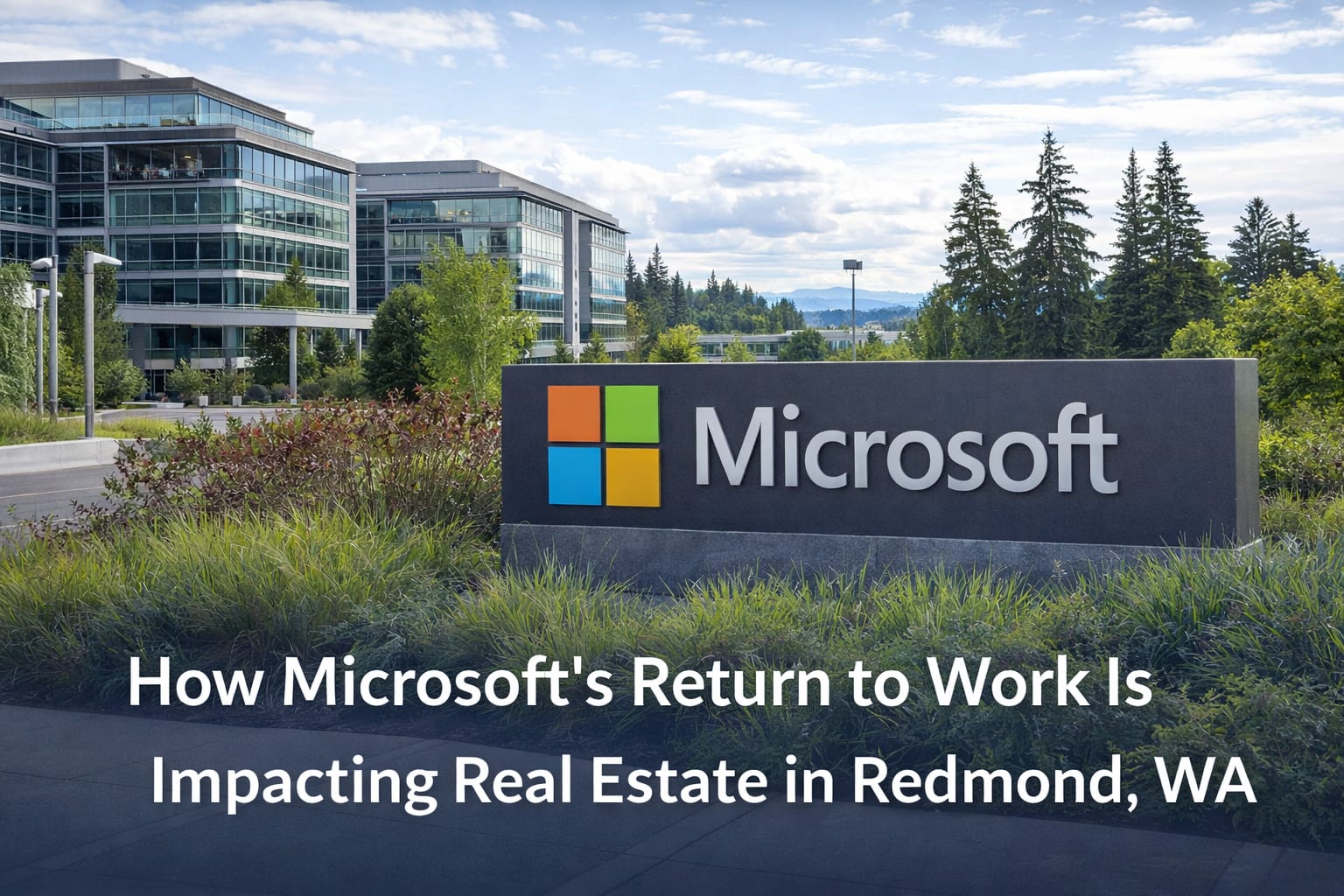

How Microsoft’s Return to Work Is Impacting Real Estate in Redmond, WA
As Microsoft continues to evolve its return-to-work and hybrid work policies, the ripple effects are being felt across the Redmond real estate market. As Microsoft’s headquarters city—and a major employment hub—Redmond has long been influenced by how and where Microsoft employees work.
Understanding this shift is important for buyers, sellers, and homeowners who want to make informed decisions in a market closely tied to the tech industry.
Redmond’s Longstanding Connection to Microsoft
Redmond has been synonymous with Microsoft for decades. The company’s presence has shaped:
Housing demand
Neighborhood growth
Infrastructure and transit investment
Long-term property values
When Microsoft adjusts how employees work—whether fully in-office, hybrid, or flexible—it naturally influences where people choose to live and how they approach housing decisions.
What “Return to Work” Really Means Today
For many Microsoft employees, return to work does not mean a full five days in the office. Instead, it often looks like:
Hybrid schedules
Team-based in-office expectations
More intentional commuting days
This hybrid reality is influencing real estate decisions differently than a traditional return-to-office model.
Increased Interest in Proximity to Campus
As in-office time becomes more structured, many employees are reconsidering commute distance.
In Redmond, this has led to:
Renewed interest in neighborhoods close to campus
Strong demand for homes with reasonable commute times
Buyers prioritizing walkability, transit access, and nearby amenities
Homes that reduce commute friction tend to attract more attention when return-to-work expectations increase.
Shifts in Buyer Priorities
Microsoft’s evolving work model has also changed what buyers want in a home.
Common priorities include:
Dedicated home office space
Flexible floor plans
Reliable internet and functional layouts
Proximity to both work and everyday amenities
Redmond homes that balance work-from-home functionality with access to campus are especially appealing.
Impact on Redmond Home Prices and Demand
While the Redmond market remains competitive, return-to-work trends can influence:
Which neighborhoods see the strongest demand
How quickly well-located homes sell
Buyer urgency in certain price points
Homes near Microsoft, transit routes, and major commuter corridors often benefit from renewed buyer interest when office presence increases.
What This Means for Sellers in Redmond
For sellers, Microsoft’s return-to-work policies can create opportunity—especially if your home offers:
A manageable commute
Work-from-home flexibility
Proximity to parks, dining, and services
Strategic pricing and preparation matter more than ever in a market where buyers are thoughtful and data-driven.
What This Means for Buyers
For buyers, return-to-work expectations reinforce the importance of:
Location
Commute analysis
Long-term livability
Understanding how often you’ll be on campus—and how you want your daily life to feel—can help guide smarter purchase decisions.
Long-Term Outlook for Redmond Real Estate
While work policies may continue to evolve, Redmond’s fundamentals remain strong:
A major tech employer base
Limited housing inventory
Strong schools and infrastructure
Continued investment in transit and amenities
Rather than dramatic swings, return-to-work trends tend to reshape demand patterns within Redmond, not eliminate them.
Why Local Insight Matters Right Now
National headlines don’t always reflect what’s happening on the ground. In a tech-driven market like Redmond, understanding micro-trends—by neighborhood and buyer type—can make a meaningful difference.
Working with someone who understands both the tech landscape and the local market helps buyers and sellers navigate these shifts with confidence.
Thinking About Buying or Selling in Redmond, WA?
If you’re curious how Microsoft’s return-to-work policies may affect:
Your home’s value
Buyer demand in your neighborhood
Timing your next move
A pressure-free conversation can help you understand how current trends apply to your specific situation.
Real estate decisions are better made with clarity—not headlines.
Book a consult: Schedule a 30 minute call
FAQs: Microsoft Return to Work & Redmond Real Estate
How is Microsoft’s return to work impacting real estate in Redmond, WA?
Microsoft’s return-to-work and hybrid policies are increasing interest in homes closer to campus, transit routes, and neighborhoods with manageable commutes. This has shifted demand patterns within Redmond rather than causing dramatic market changes.
Is demand increasing for homes near Microsoft’s Redmond campus?
Yes. As in-office expectations become more defined, many employees are prioritizing proximity to campus, walkability, and shorter commute times—making nearby neighborhoods more competitive.
Does Microsoft’s return to work mean prices will rise in Redmond?
While pricing is influenced by many factors, return-to-work trends can support demand in certain neighborhoods and price points. Homes that offer location, flexibility, and work-from-home functionality tend to perform best.
Are buyers still looking for home office space in Redmond?
Yes. Even with increased in-office days, buyers continue to prioritize dedicated home offices or flexible spaces, reflecting the ongoing hybrid work model.
How does hybrid work affect where Microsoft employees choose to live?
Hybrid schedules often lead buyers to look for a balance—close enough to campus for commute days, but still offering lifestyle, space, and long-term livability. Redmond neighborhoods that provide both are especially appealing.
What should Redmond sellers know about Microsoft’s return to work?
Sellers should highlight features buyers value in a hybrid environment, such as location, commute efficiency, flexible layouts, and nearby amenities. Strategic pricing and preparation are key in a data-driven buyer market.
Is Redmond real estate still stable with changing work policies?
Yes. Redmond remains a resilient market due to its strong employment base, limited housing supply, and continued infrastructure investment. Return-to-work policies tend to reshape demand rather than weaken the market.
Should Microsoft employees buy now or wait?
The right timing depends on individual goals, commute needs, and long-term plans. Understanding how return-to-work expectations affect your lifestyle can help guide a smarter real estate decision.