

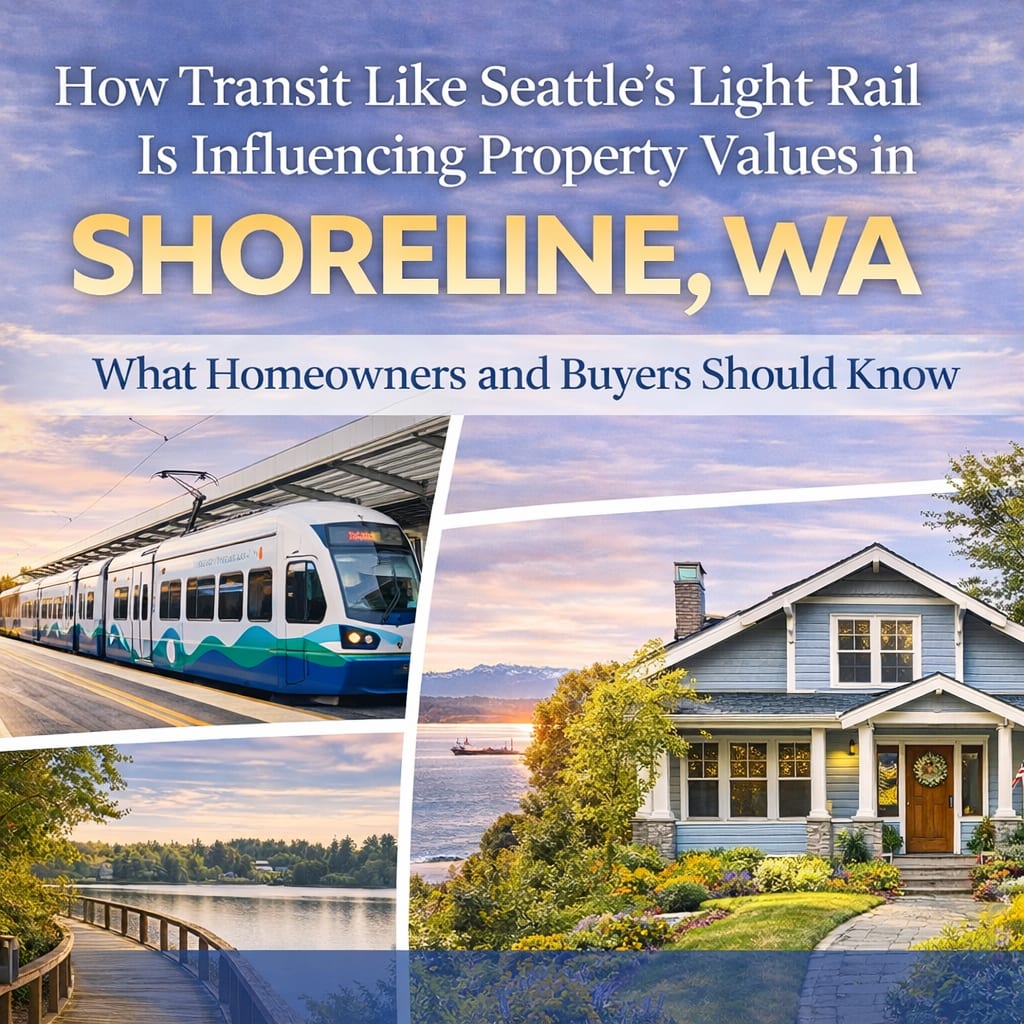

How Transit Options Like Seattle’s Light Rail Are Influencing Property Values in Shoreline, WA
Shoreline, Washington is experiencing major transformation — and one of the biggest drivers of that change is the expansion of the regional light rail system. With the Shoreline North/185th and Shoreline South/148th stations opening as part of the Link light rail extension, buyers, sellers, and homeowners are all asking the same question:
Does light rail actually increase property values?
The short answer: Research consistently shows that improved transit access can increase housing demand, neighborhood desirability, and long-term property value — and Shoreline is positioned to benefit from those trends.
Let’s break down why.
Light Rail Improves Accessibility — One of Real Estate’s Biggest Value Drivers
Accessibility is one of the strongest predictors of housing demand. When residents can commute more easily, access jobs, and reduce reliance on driving, neighborhoods often become more desirable to buyers.
Studies consistently show homes located near transit stations can command higher prices because buyers prioritize convenience and reduced commute times. Some research shows properties near public transit systems can sell for up to 20% more than similar homes farther away.
In fast-growing metropolitan areas like Seattle, transit access is increasingly becoming part of the “location, location, location” conversation.
Research Shows Measurable Price Premiums Near Light Rail Stations
Multiple studies examining light rail and transit-oriented development have identified consistent patterns:
Walking Distance Creates the Strongest Value Impact
Research shows that:
Homes within about ¼ mile of a station can see price premiums of roughly 10–20%
Homes within about ½ mile may see increases around 5–10%
Value impacts tend to decrease beyond walkable distance
These premiums often appear before a station opens and stabilize after service begins.
In Shoreline specifically, early estimates suggest property values within a half-mile of new light rail stations could increase approximately 5–10% over time.
Shoreline’s Light Rail Expansion Is Still in Early Growth Stages
The Shoreline stations opened in 2024, meaning the market is still adjusting to the new infrastructure. Historically, property values near transit often increase gradually as:
Buyers gain confidence in reliability and commute benefits
New housing and commercial development occurs near stations
Infrastructure improvements improve walkability and accessibility
Some housing projections suggest Shoreline property values could continue to grow as the transit system becomes more established and widely used.
Transit Often Spurs Neighborhood Development and Investment
Light rail does more than improve commuting — it often triggers broader neighborhood transformation through transit-oriented development (TOD).
Research shows TOD can increase housing demand and neighborhood desirability through three major mechanisms:
Improved access to employment and amenities
Increased commercial and residential development around stations
Growth in walkable retail and lifestyle conveniences
Together, these improvements often increase both demand and willingness to pay for housing in surrounding neighborhoods.
In Shoreline, zoning changes and redevelopment opportunities near stations have already begun increasing land values and encouraging new housing development.
Light Rail Appeals to Changing Buyer Preferences
Today’s buyers — particularly younger professionals, commuters, and lifestyle-focused households — often prioritize transit accessibility.
Many buyers are seeking:
✔ Predictable commute times
✔ Reduced reliance on freeway traffic
✔ Walkable and mixed-use neighborhoods
✔ Long-term investment stability
Light rail supports all of these preferences, which naturally increases housing demand in transit-connected communities.
Not Every Property Experiences the Same Impact
While transit generally supports value growth, the effect can vary depending on location and property type.
For example:
Condos and townhomes near stations often see stronger demand from transit-focused buyers
Single-family homes can benefit, though appreciation may vary by street and neighborhood layout
Homes within walkable distance tend to see stronger value growth than properties requiring a drive to reach transit
This is why hyper-local analysis is essential when evaluating how transit impacts a specific home.
Infrastructure Improvements Add Additional Value
The light rail expansion is also bringing major supporting improvements to Shoreline, including:
New pedestrian and bicycle connections
Transit-oriented redevelopment projects
Expanded community amenities
Improved regional connectivity
Projects like Shoreline’s planned “Trail Along the Rail” and pedestrian bridge improvements help increase neighborhood accessibility and lifestyle appeal, which can further support property values over time.
What This Means for Shoreline Homeowners and Buyers
For homeowners, light rail often represents long-term equity growth potential and increased buyer interest.
For buyers, proximity to transit can offer:
Greater commuting flexibility
Long-term appreciation opportunities
Lifestyle convenience and accessibility
As Shoreline continues to grow, transit access will likely remain a major factor influencing housing demand.
Considering Buying or Selling Near Light Rail in Shoreline?
Transit-adjacent real estate requires thoughtful strategy and local insight. The impact varies by neighborhood, property type, and distance from stations.
If you’re wondering:
• How light rail impacts your home’s value
• Which Shoreline neighborhoods may benefit most
• Whether proximity to transit aligns with your lifestyle goals
• How to strategically buy or sell near transit
👉 I’m always happy to provide local guidance and market insight tailored to your specific goals.